A Street Worth Walking

Avenida Brasil
The first time someone visits Porto, they usually want to see the Ribeira.
It's the easy choice. The river, the bridges and the narrow streets climbing the hillside have become the city's calling card. If you've only seen Porto in photographs, you've probably seen them too.
We usually suggest is Avenida Brasil.
People are sometimes surprised. There isn't a famous monument waiting at the end of the road. No cathedral. No museum. No square filled with tourists taking photographs. It's simply a road that follows the Atlantic. Perhaps that's why it stays with people.
On almost any morning you'll find much the same scene. Someone walking a dog before work. Cyclists heading towards Matosinhos. A young family pushing a stroller. Surfers crossing the road barefoot, boards tucked under an arm. Older couples sitting on the seawall, watching waves that have rolled onto this stretch of coast long before any of the buildings behind them existed.

You can't spend much time on Avenida Brasil without thinking about the Atlantic.
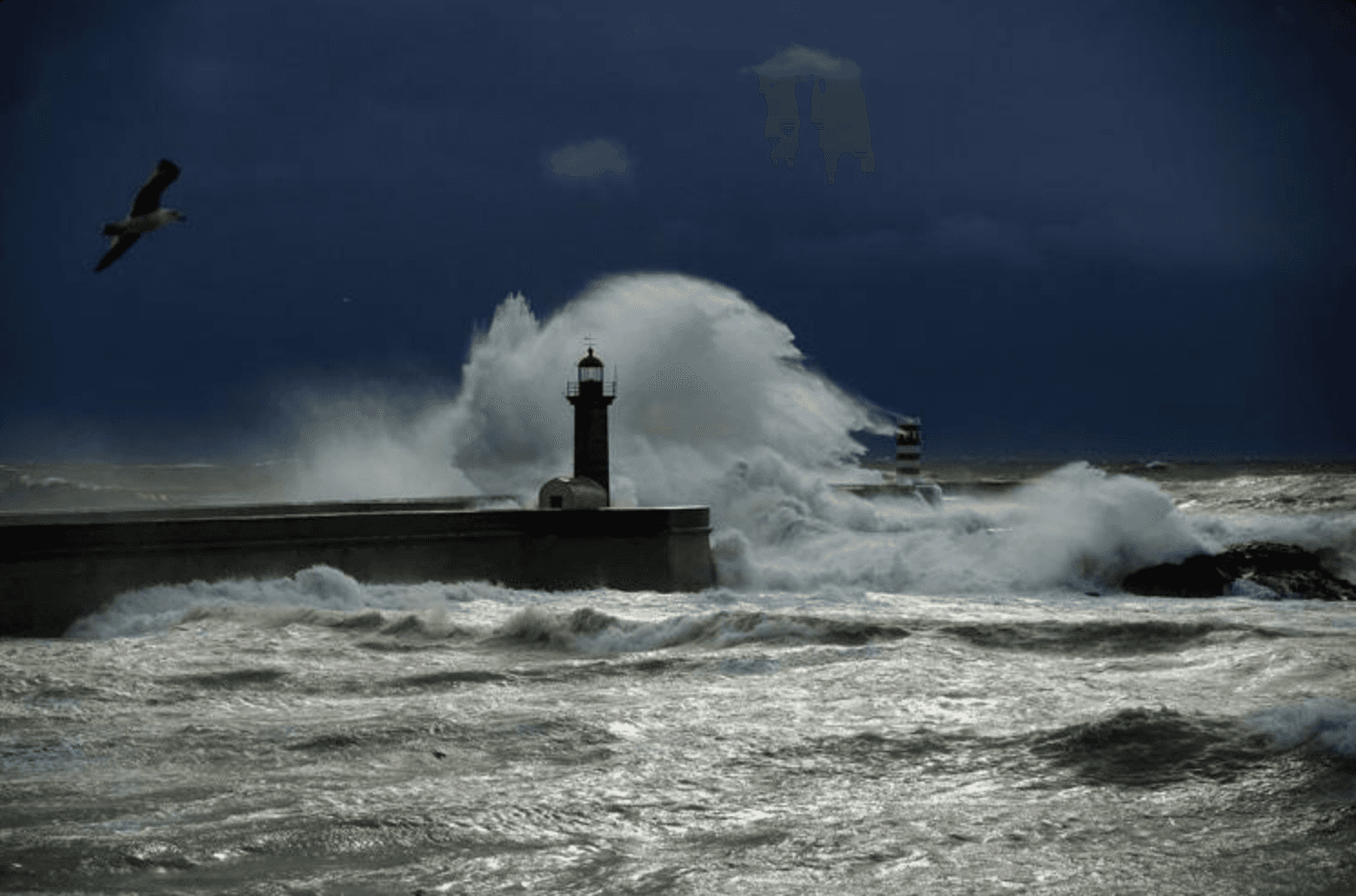
The ocean has always been Porto's neighbour, but it hasn't always been a gentle one. Long before people came here to watch the sunset, these waters carried ships loaded with Port wine, cork and textiles to Britain, Brazil and beyond. They also took their share in return. Before the Port of Leixões opened in 1892, the entrance to the Douro was one of the most feared on the Iberian coast. Captains had to thread their ships between hidden rocks, shifting sandbanks and Atlantic swells that could change without warning. Winter storms regularly drove vessels onto the reefs around Foz, and for centuries shipwrecks were simply part of life here. Fishermen often became rescuers before they became fishermen again.
Even today, when Atlantic storms roll in and waves crash over the seawall, it's easy to imagine why generations of sailors approached Porto with equal measures of hope and caution.
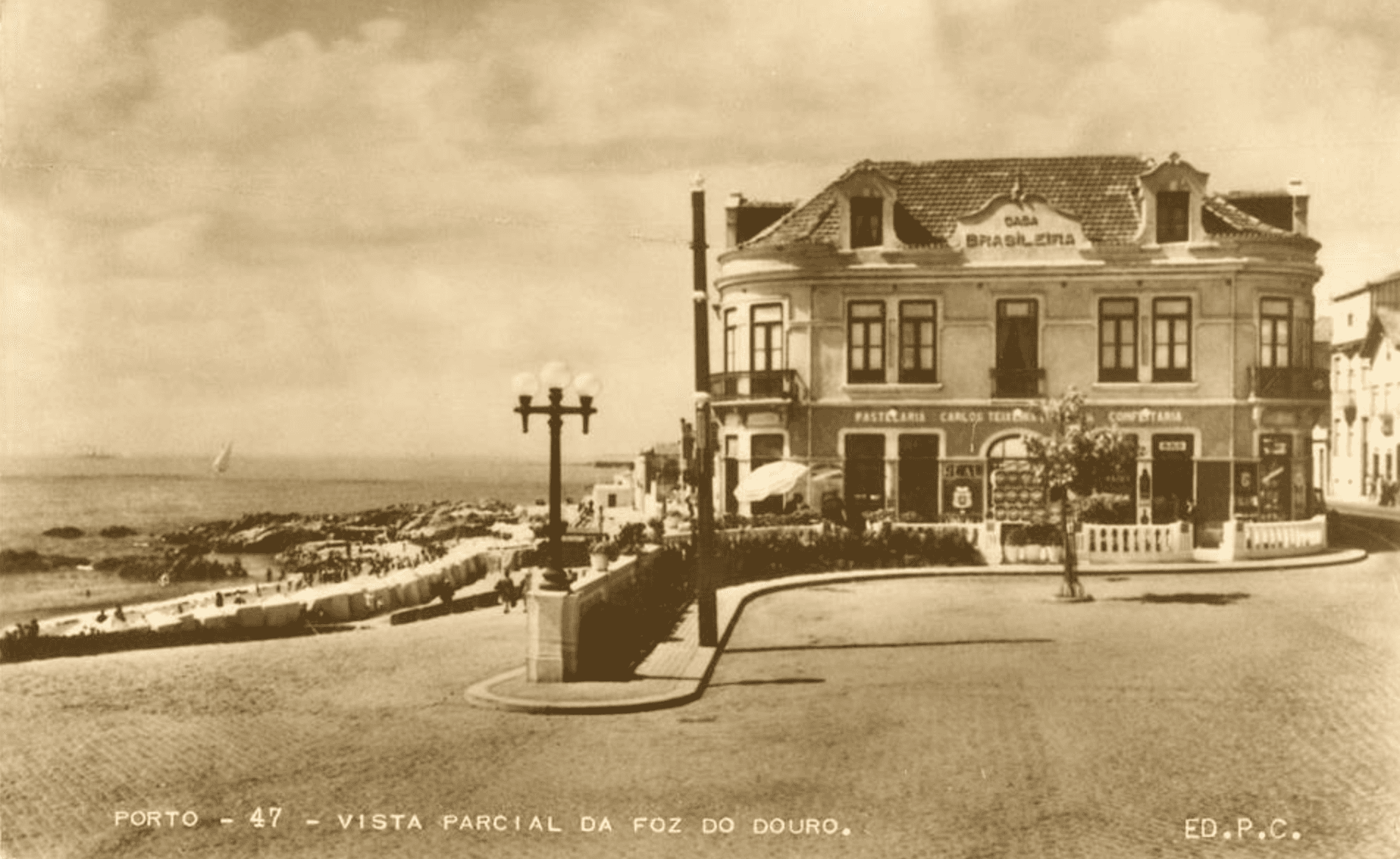
Foz grew where the river surrendered to the ocean. For much of its history it was a working community of fishermen, pilots and merchants. Nets dried in the sun. Boats were hauled onto the beach by hand. Families lived according to tides and weather.
During the nineteenth century, doctors across Europe started prescribing sea air and cold-water bathing as treatments for everything from respiratory illness to nervous exhaustion. Porto's wealthier families began making the journey west during the summer months, escaping the heat of the city to spend time beside the Atlantic. The Portuenses even had a phrase for it: ir a banhos — literally, "to go for baths." It wasn't simply about swimming. It was about health, fresh air and a different rhythm of life. CM Porto
As more people arrived, the coast began to change with them.
What had once been little more than the Estrada de Carreiros, a coastal road used by ox carts travelling between Foz and Matosinhos, gradually became a broad tree-lined avenue. The municipality approved plans to widen and landscape it in the 1890s, and after Nevogilde became part of Porto, the avenue continued to grow westwards. In 1912, part of the old Avenida de Carreiros was officially renamed Avenida do Brasil, honouring the longstanding ties between Porto and Brazil, forged through trade, migration and family connections. CM Porto
Most people walking here today never think about that history.
Nothing is announced. There are no grand plaques explaining why the street looks the way it does. The past survives in quieter ways. In old villas that still face the sea. In stone walls that predate the apartment buildings beside them. In cafés that seem as though they've always been here.
The city has changed around them. They've simply carried on.
In 1930, the city approved an ambitious programme to beautify the avenue. A year later, the pergola beside Praia do Molhe was completed. Designed by António Enes Baganha, it wasn't intended as a monument. It was simply part of a broader effort to make Porto's waterfront somewhere people would want to spend time. Nearly a century later, it has become one of the city's most recognisable landmarks, though perhaps not for the reason its designer imagined. Children race beneath it. Teenagers meet there after school. Couples stop halfway through an evening walk. It has become less a piece of architecture than part of everyday life. Wikipedia
Nobody seems to be performing for the city. People aren't there because someone told them it was one of Porto's most beautiful places. They're there because it's where they meet a friend, walk the dog, clear their head after work or buy bread on the way home.
Cities often spend millions trying to create places that feel alive. Avenida Brasil arrived there almost by accident.
It grew over generations. Early twentieth-century villas stand beside apartment buildings from the 1950s, while newer homes have found their place without overwhelming what was already there. The trees are mature because they've had decades to grow. The cafés feel established because many have served the same neighbourhood for years. Nothing feels particularly curated.
That kind of character can't be built all at once. It has to accumulate.
Every city has streets that become symbols. Some owe their reputation to remarkable buildings. Others to great historical events. Avenida Brasil has earned its place more quietly than that. It has simply remained one of the best places in Porto to spend a couple of hours.
Whenever friends ask where they should go after they've seen the Ribeira, I still send them here.
Not because they'll discover a hidden secret. They won't. Avenida Brasil has been one of Porto's best-loved streets for generations.
I send them because, if they slow down for a while—if they watch the surfers, the fishermen casting lines from the rocks, the runners, the old couples on the seawall, and the Atlantic doing what it has always done—they'll begin to understand something about Porto that no guidebook quite manages to capture.
This has always been a city shaped by the water. Avenida Brasil simply reminds you of that.



